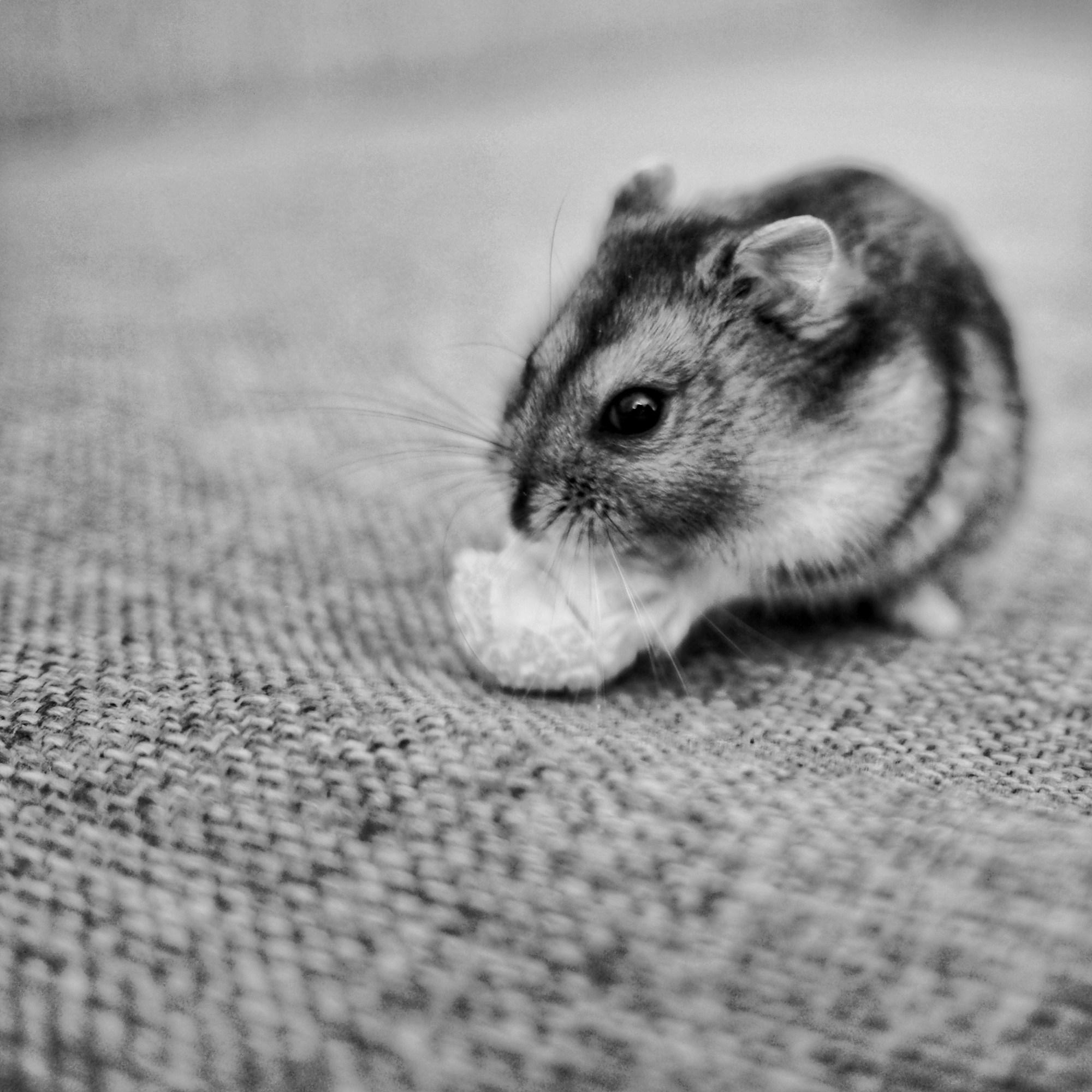

Matt here, with the short answer. A hamster needs something safe to chew every single day, because its front teeth never stop growing, and the best everyday chew toy is plain, untreated wood or a bare cardboard tube. Skip anything painted, glued, cedar or rubbery, and anything held together with metal.
That’s most of it.
The rest is the stuff that trips people up. Which woods are fine? Why does your furball still gnaw the cage bars when the cage is full of chews? (The answer’s a bit uncomfortable.) What are those seed sticks at the pet store, really? And which tooth signs mean it’s time for a vet instead of another chew toy?
Quick note first. I’m not a vet, and HamsterStar leans on what vets and welfare groups publish. Anything about a sore mouth or a hamster that won’t eat goes to a vet who sees small pets.
Why Your Hamster Chews on Everything
Hamsters are rodents, and rodents are built to gnaw. Their front teeth, the incisors, keep growing for a hamster’s whole life. Chewing is how they wear them down.
PetMD’s page on hamster teeth, written by Laurie Hess, DVM, puts it plainly: the front teeth continuously grow, and gnawing is what keeps them in check. The RSPCA tells owners to check those front teeth regularly and to have a vet confirm they’re growing properly. So a chew toy isn’t a nice extra. It’s closer to a toothbrush.
Here’s the bit that scares new owners. Healthy hamster teeth aren’t white. The front teeth are covered in yellow-orange enamel, so if you peek at your little buddy’s mouth and see orange, relax. That’s normal.
Teeth that look too long or crooked are a different story, and I’ll get to them at the end. That’s a vet job, not a chew-toy job.
Plain Wood and Bare Cardboard Are the Everyday Chews
If you only buy one kind of chew, buy wood. PetMD’s page on hamster toys, from Teresa Manucy, DVM, says wood toys are a good option as long as the wood is free of pesticides and chemicals. That means not pressure-treated and not painted.
Which wood? Her list takes in hardwood blocks (oak or maple), untreated kiln-dried pine, and wood from some fruit trees, like apple or pear. I’d add one rule of my own: if you can’t tell what a wooden toy is made of, or whether it was treated, it doesn’t go in the cage.
Now, the shape. This surprised me. A small 2020 study in Animal Technology and Welfare, a journal for people who care for lab animals, compared two wooden chews for Syrian hamsters. Medium wooden bricks went into 32 cages and aspen balls went into 12 cages, for 2 weeks. Then the author weighed what was left of each one.
The balls lost a lot more weight than the bricks. In other words, they got chewed a lot more. The author’s take was that a ball is simply a more interesting thing for a hamster to work on, and what was left of the balls pulled apart in soft little curls.
So if your hamster ignores a plain block for a week, don’t decide it hates wood. Try a ball or a stick first. Honestly, a lot of “my hamster won’t chew” stories end with a different shape.
The cheapest chew toy you’ll ever own is already in your bathroom. PetMD lists the recycled cardboard tubes from the middle of paper towels or toilet paper as a fine thing for a hamster to chew.
My own rules for cardboard are pretty simple. Plain brown only. I skip anything glossy or heavily printed, I peel off any tape, and I tear away the last strip of paper stuck to a toilet roll. If a tube looks snug for a big Syrian, I cut it open along its length so nobody gets wedged in it. Most dwarf hamsters fit through a tube easily; a chunky Syrian sometimes doesn’t.
And expect it to get wrecked. That’s the point! A hamster that turns a tube into confetti in 3 days has had a great 3 days. Pull out the soggy bits when you spot-clean the cage, and swap in a fresh one.
What I’d Keep Out of the Cage
Here’s the skip list, mostly straight from that same vet-written PetMD page on toys.
Cedar and other evergreen woods top the list, because their aromatic oils can irritate the airways. Citrus wood is out too. Soft pine that hasn’t been kiln-dried can splinter, and so can yew. Plywood and other man-made boards are a no because the glue holding them together is toxic.
Rubber or foam chew toys are on the no list as well. So is metal, including wooden toys held together with metal pieces, since metal isn’t something a hamster should swallow.
I’d add thin plastic to that, just from my own point of view. A plastic hide is fine for hiding in. But if your hamster starts working on its doorway, it’s swallowing little bits of it, and I’d swap it for a wooden or cardboard hide.
One more thing to know. A lot of toys at the pet store are sold for “small animals” in general, so read the label, look at what it’s actually made of, and pass on anything you can’t identify.
Seed Sticks and Treat Bars Are Snacks

Walk down the chew aisle and half of it is seed sticks, honey-glued bars and yogurt drops. I get why. They look like chews, and hamsters go nuts for them.
But they’re treats. A seed stick gets eaten, not gnawed down, so it does far less for the teeth than a block of plain wood that hangs around for weeks. PetMD’s hamster care page says seeds should be an occasional treat, not the main diet, and that’s how I’d handle these: now and then, and small.
The mineral and salt licks sold right beside them are their own question. I dug into that one in are salt licks okay for hamsters.
Bar Chewing Is About the Cage, Not the Toys

This is the one I feel strongest about. A hamster gnawing the cage bars night after night usually isn’t asking for another chew toy. It’s telling you something about the cage.
In a 2007 study in the journal Animal Welfare, Swiss researchers housed 60 female golden (Syrian) hamsters on their own in four cage sizes, from 1,800 cm² of floor up to 10,000 cm², and filmed them. Wire-gnawing turned up in every size. But the hamsters in the small cages gnawed longer and more often. Wheel running didn’t differ between the sizes at all.
The authors concluded that welfare looked better in the biggest cages, the 10,000 cm² ones. That’s about 1,550 square inches of floor, or roughly a 100 cm by 100 cm footprint (around 39 inches each way).
So before you buy more toys, look at the floor space. Here’s what I’d look for in the best cages for Syrian hamsters. And if it’s the water bottle taking the beating instead of the bars, that’s a slightly different story: why hamsters bite the water bottle.
How I’d Set Up a Chew Corner
Here’s my routine, and it’s pretty low effort.
I’d keep 2 or 3 different chews in at once, in different spots: a wooden one near the nest, a cardboard tube along a path your hamster already uses, maybe a stick near the food. Then I’d change one of them about every 7 days. A new thing gets more attention than the same old block, and it’s an easy habit to tie to the weekly spot-clean. Anything wet, moldy or soiled goes in the bin right away.
Deep bedding helps too, in my book. A hamster with plenty to dig in has more to do at night (here’s how deep hamster bedding should be).
And don’t panic if a chew sits untouched for a while. Some hamsters are just picky. Try another shape or another material before you decide yours doesn’t chew. Every hamster chews. Promise.
When the Teeth Need a Vet Who Sees Small Pets
Chew toys help keep teeth worn down, but they can’t fix a tooth that’s already a problem. PetMD’s page on teeth lists what to watch for. Overgrown front teeth can poke into the gums or tongue and cause cuts and bleeding. Trouble with the back teeth can look like a hamster that has a hard time eating, loses weight or gets a swollen lower jaw.
The same page says a hamster that’s losing weight, isn’t eating normally or isn’t passing its usual droppings should see a rodent-savvy vet as soon as possible.
Please don’t try to trim teeth at home. The RSPCA is clear that overgrown teeth need a vet. And don’t give your hamster any medicine a vet didn’t recommend, because the RSPCA warns that medicines for people or other animals are dangerous to hamsters.
PetMD also suggests a check-up at least once every 12 months. That’s a good chance to have the vet look at those teeth while your furry friend is (mostly) calm.
So, the short version one more time. Give plain wood and plain cardboard, skip the risky stuff, get the biggest cage you can fit, and keep an eye on those orange teeth. Your hamster will handle the gnawing.