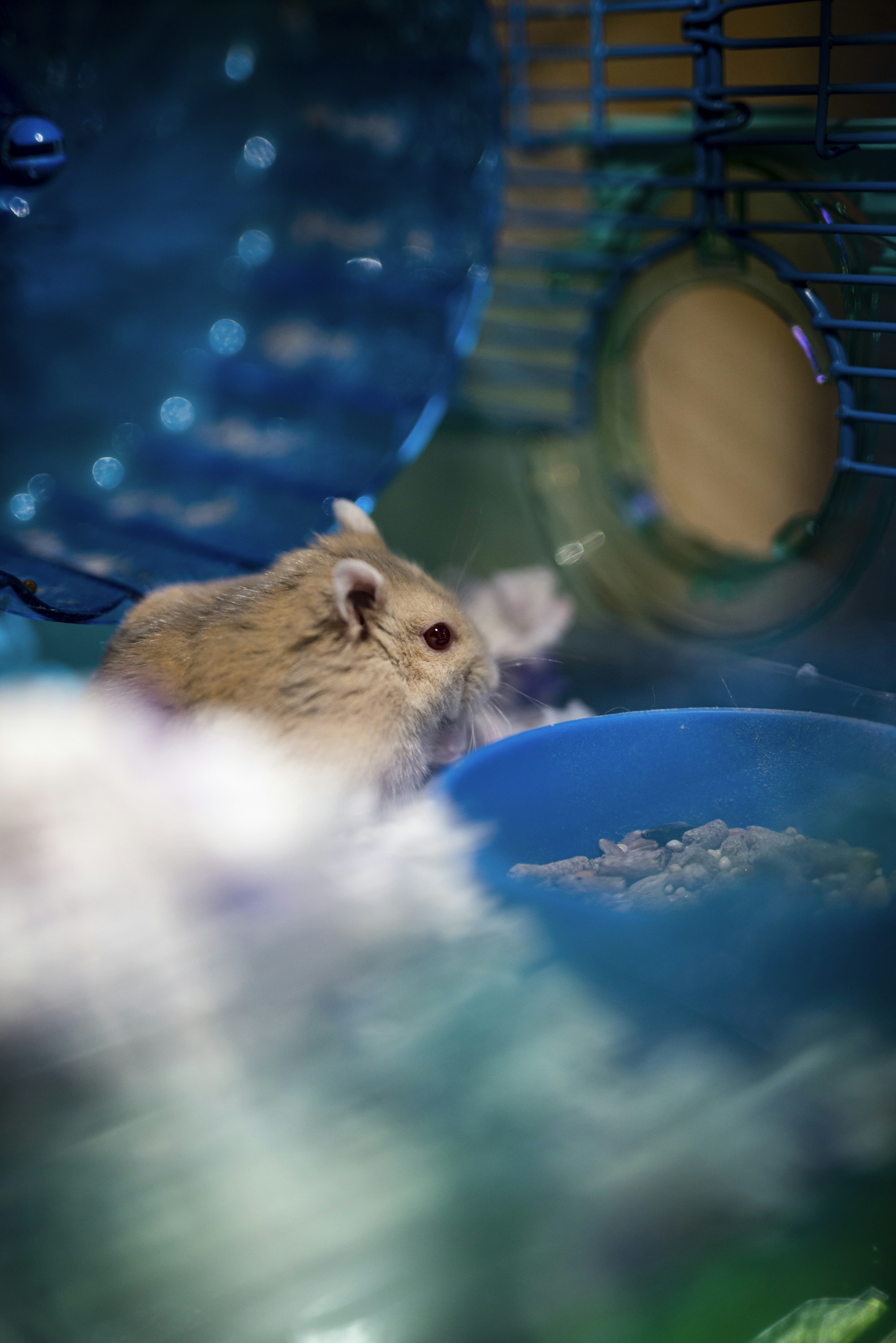

If your kid wants a pet they can hold and play with after school, a pair of guinea pigs usually fits better than a hamster. If you’ve got less room, less time and a kid who’s fine watching more than cuddling, one hamster is the easier start. The catch on each side: guinea pigs mean two animals for 5 to 7 years, and a hamster is awake when your kid is asleep.
Matt here. I get this question from parents all the time, usually from the aisle of the pet store, phone in one hand and a cage box in the other. Both are lovely little pets. They’re just built for very different houses.
Night Owl or All-Day Snacker

Hamsters are nocturnal. So the little buddy your kid picked out at noon will be curled up asleep in its bedding at 4 p.m., and wide awake running laps at midnight (ask any parent with a hamster in the kid’s room).
That’s not a flaw, it’s just a hamster. But it matters for a kid. Prime play time for a child is right after school, and that’s prime sleep time for a hamster. Waking one up to play is a good way to get nipped, and honestly, I’d be grumpy too.
Guinea pigs keep a very different clock. They’re active up to 20 hours a day and sleep in short bursts. In real life that means a guinea pig is usually up and about when you walk into the room, often squeaking at you because it heard the fridge door.
If your kid wants a pet that’s awake when they are, that’s a big point for the guinea pigs.
One Hamster, but Never One Guinea Pig

Here’s the one that changes your shopping list.
Syrian hamsters live alone, and Chinese hamsters are better kept on their own too. Some dwarf types, like Roborovskis or Campbell’s dwarfs, can share with the right setup, but they can also fight, so plenty of owners keep dwarfs solo too. One furball, one cage. Simple.
Guinea pigs are the opposite. They get lonely and naturally prefer living in groups, so it’s best to have at least two who get along.
So “a guinea pig” is really “two guinea pigs.” That doubles the food and the vet visits. The space too. Keep that in mind when you compare prices, because the single guinea pig on the shelf isn’t the real starting cost.
How Much Floor Each One Needs
Both of these pets need more room than the boxes at the pet store suggest.
For a hamster, plan on at least 100 x 50 cm of floor, about 39 x 20 inches, and 50 cm tall, for every species. Give it a deep bedding layer of 25 cm or more, about 10 inches, so the hamster can dig, and a wheel big enough that its back stays flat while it runs.
For guinea pigs, 7.5 square feet is the bare minimum even for one. For a pair, 7.5 square feet is still the minimum, with 10.5 square feet (30 x 50 inches) preferred. No wire floors, no plastic tubs or glass tanks, and paper bedding rather than cedar or pine shavings.
A good hamster setup fits on a dresser. A good guinea pig pen for two is closer to a coffee table, and it lives on the floor or a big stand.
What Goes in the Food Bowl

Hamster food is pretty easy: a good hamster mix or pellets, a few bits of fresh veg, fresh water, and a chew toy to keep those front teeth in check.
Guinea pigs need more thought. They eat unlimited grass hay every day, so you’ll be buying hay by the bag forever. And here’s the big one: guinea pigs can’t make their own vitamin C. People can’t either, which is why we eat oranges. They need it in their diet regularly, and the usual sources are guinea pig pellets with vitamin C in them and fresh veggies like bell peppers.
That means a daily routine of fresh veg for a guinea pig, not a once-a-week treat. Ask your vet how to cover it for your pair, and keep pellets fresh, since the vitamin C in them breaks down over time.
Both animals have teeth that grow all their lives, so both need hay or chews to wear them down.
Which One Likes Being Held

This is the “cuddles” part, and it’s where guinea pigs usually win with kids.
Guinea pigs are usually gentle and rarely bite when handled calmly. The right way to pick one up is to support the chest with one hand and the back end with the other. Ones handled from a young age tend to become affectionate and comfortable being held. A calm guinea pig sitting on a towel in a kid’s lap is about as sweet as pets get.
Hamsters can be tamed, and a tame Syrian will sit in your hand and stuff its cheeks. But they’re small and quick (so, easy to drop), and they nip when they’re scared or woken up. Rough or careless handling can hurt them, so an adult should always be responsible for a hamster’s handling and care.
So for a young kid who wants to hold their pet, I’d lean guinea pig. For an older kid who’s happy to sit on the floor and let a hamster climb on them, either one works, and will my hamster bite me if I pick it up is a good read first.
The Money Side, Year After Year
A hamster is one animal, in one cage, eating a small bowl of food, and it usually lives up to two years, though some go longer. So the whole commitment is a couple of years.
Guinea pigs are two animals, so two of every vet visit. They eat hay every single day, plus fresh veg for their vitamin C. They need the bigger pen and more bedding to fill it. And they live a long time, typically 5 to 7 years and as long as 8.
That long life is wonderful if you’re ready for it. It also means a guinea pig bought for a 9-year-old might still be around when that kid is learning to drive. Talk about who takes over if the kid loses interest, before you buy.
Noise and Who Cleans the Cage

Noise first. A hamster is quiet in the daytime and busy at night, and a cheap wheel squeaks. If the cage is going in a kid’s bedroom, get a silent wheel or plan to move the cage out at bedtime. Guinea pigs are chatty. They squeak, chirp and tooth-chatter, and plenty of owners hear a loud wheek every time a bag rustles. Most kids love it. Light sleepers sometimes don’t.
Cleaning follows size. One hamster in deep bedding needs spot cleaning and the occasional bigger change. Two guinea pigs in a big pen eating hay all day make more mess, so expect to change bedding more often. A kid can help with both, but a grown-up should own the job.
If you’re still picking a cage, start with the best hamster cages for Syrian hamsters.
So Which One Should You Get?

Pick guinea pigs if your kid wants a pet that’s awake in the daytime and likes being held, you’ve got floor space for a pen, and you’re good with two animals for the next 5 to 7 years.
Pick a hamster if space is tight, you’d rather start with a shorter commitment, and your kid is old enough to handle gently or happy to watch. Just put the cage somewhere a midnight wheel won’t keep anyone up.
And whichever you pick, find a vet who sees small pets before you need one. If your new pet stops eating, has a wet tail or is breathing hard, that’s a same-day call. Your furry friend can’t tell you what’s wrong, and small animals hide being sick until it’s serious.
One last thing people ask me: no, you can’t keep a hamster and a guinea pig together, and the answer to can hamsters breed with guinea pigs is no.
Sources: RSPCA; Merck Veterinary Manual; Humane World for Animals; Vet Help Direct; VCA Animal Hospitals; PDSA; Blue Cross.