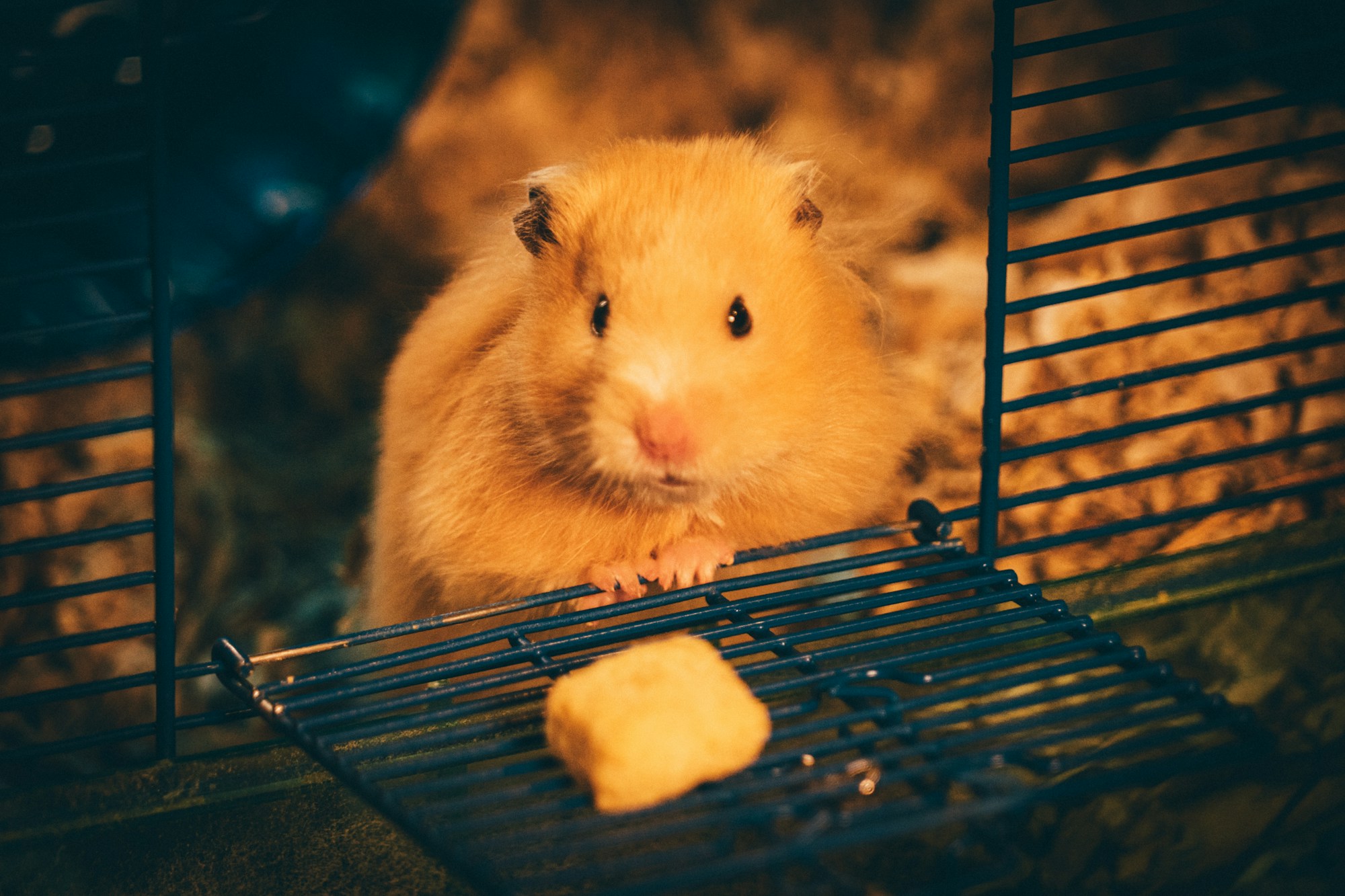
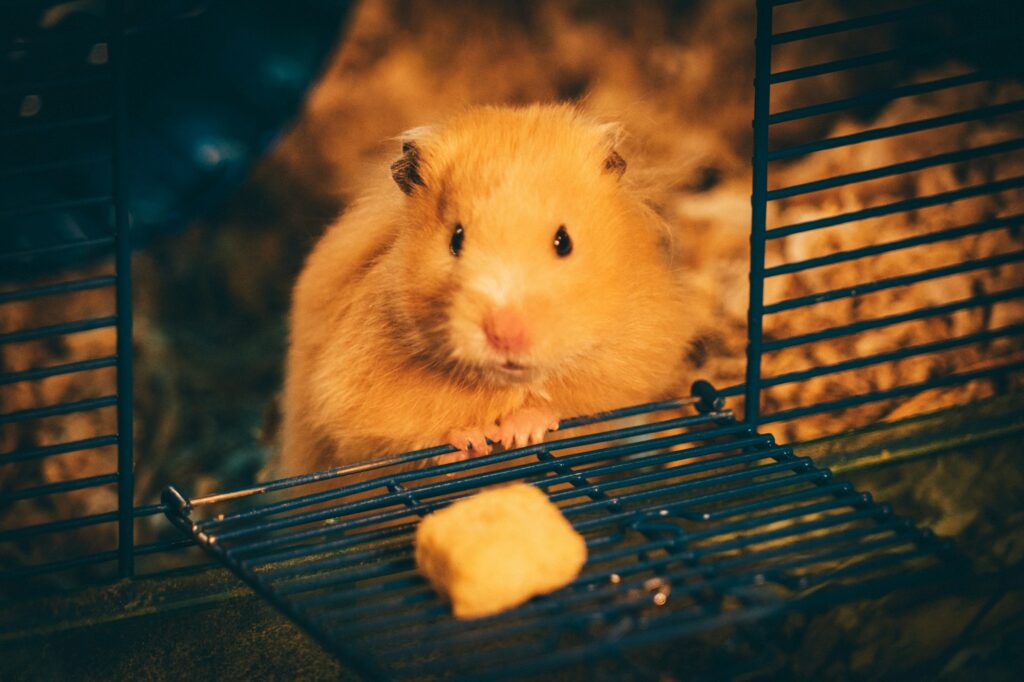
Matt here, with the short answer. Hamsters stuff their cheeks because that’s how they carry food home. Those puffy cheeks are 2 stretchy pouches that run from the mouth back to the shoulders, and a hamster fills them up, hauls the load to a safe spot and stores it for later.
So a hamster with bulging cheeks is almost always a normal, busy little buddy. It isn’t greedy, and it isn’t starving. It’s doing the one job its whole body is built around.
Almost always, though. Now and then a pouch gets stuck full, or it turns inside out, and that’s a vet visit. Below is how the pouches work, why your furball empties the bowl overnight, how to clean the cage without wrecking the stash, and the few signs that mean a pouch needs help.
Quick note first. I’m not a vet, and HamsterStar leans on what welfare groups and vets publish. If your hamster stops eating or a cheek looks wrong, call a vet who sees small pets. Don’t wait on a blog post.
What’s Actually Inside Those Cheeks
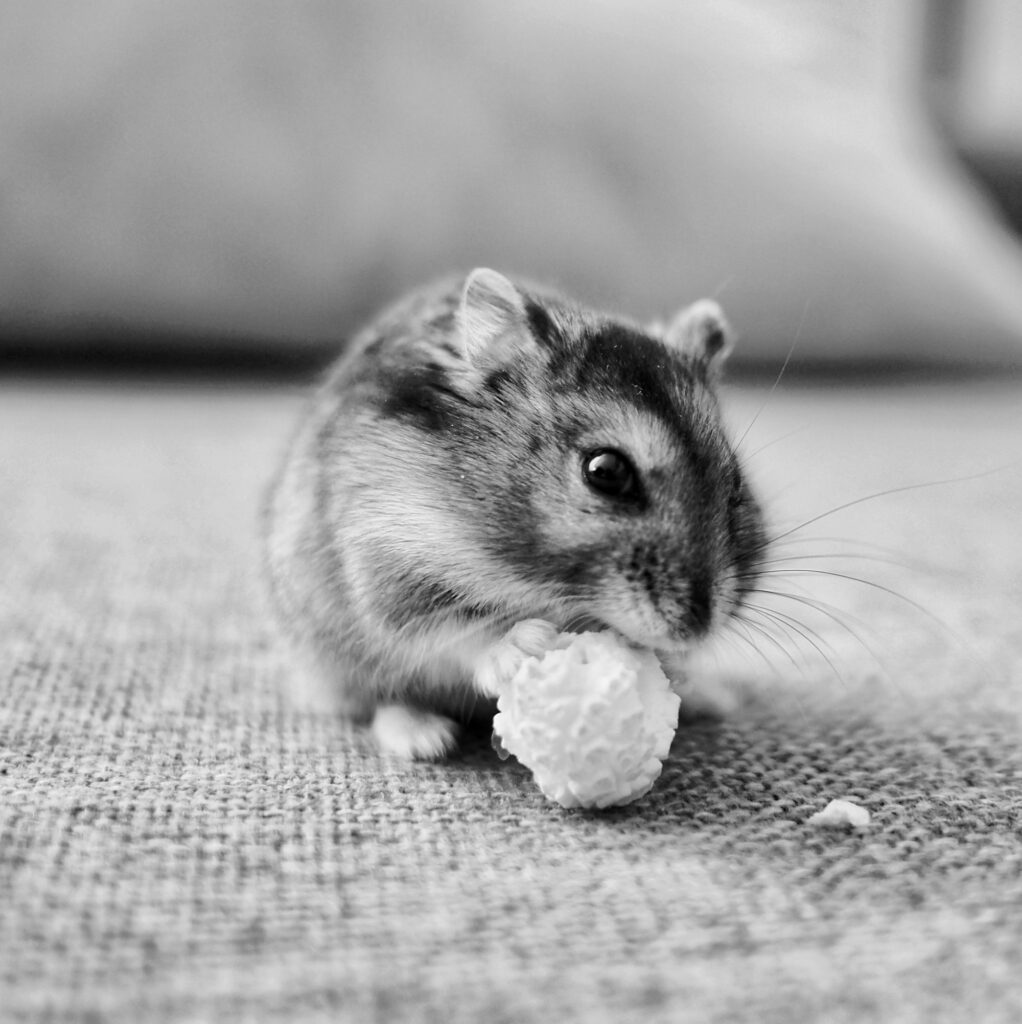
A hamster’s cheek pouches are 2 bags of loose, stretchy skin, one on each side of the head. They start inside the mouth and run back along the face to the front of the shoulders. When they’re empty, you’d never know they were there.
When they’re full, you can’t miss them. Hamster books say a loaded pair can make a hamster’s head look double, or even triple, its normal size. That’s the look in the photos people love to share, the one where your hamster seems to have swallowed 2 marbles. Not bad for an animal that often weighs around 100 to 150 grams as an adult Syrian, or a dwarf whose body can be as short as 5.5 cm (about 2 inches).
My favorite fact about it? In the part of Syria where Syrian hamsters were first found, the local Arabic name for them roughly translates to “mister saddlebags.” Honestly, nobody has named an animal better.
And here’s one I didn’t know until I went digging. Pretty much every pet Syrian alive today (yes, probably yours too) is thought to descend from one mother hamster, caught with her litter near Aleppo in 1930. DNA studies point back to her. So that cheek-stuffing habit has been passed down a very long family line.
Why They Haul Food Home Instead of Eating It
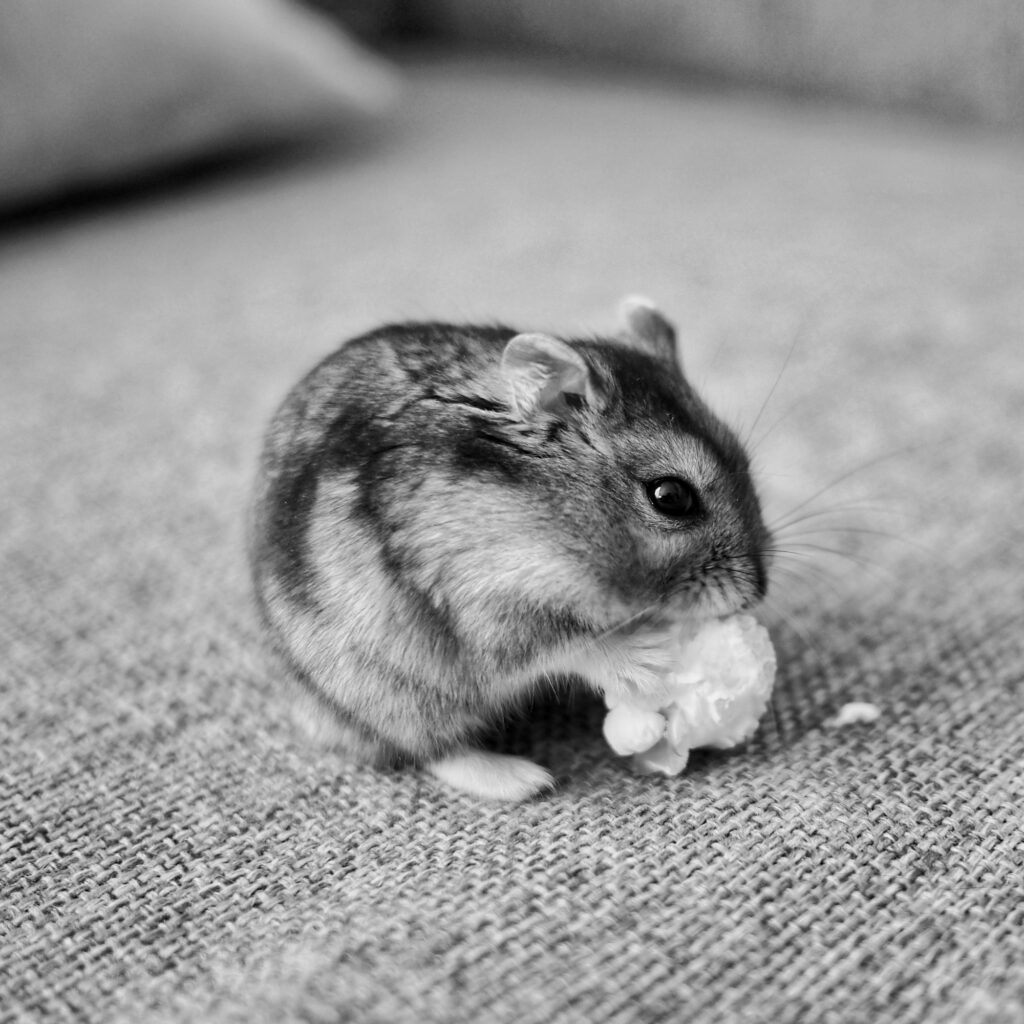
Wild Syrian hamsters are what biologists call larder hoarders. They don’t eat out in the open where something bigger can spot them. They grab what they find, stuff it in the pouches and carry it underground.
Down there it’s a whole house. Wild Syrian hamsters dig burrows about 70 cm (2.3 feet) deep, with a steep entrance tube just 4 to 5 cm wide. Inside there’s a nesting chamber and a chamber for stored food, plus a separate dead-end spot they use as a toilet. When researchers went looking for wild golden hamsters in northern Syria and southern Turkey in 1997 and 1999, they found and mapped 30 burrows.
The food chamber is the pantry. The pouches are the grocery bags.
Researchers have watched how strong that habit is, too. In a 1989 study, Syrian hamsters were only given access to food for short stretches of the day. Instead of gorging at each meal, they hoarded during those windows and then ate from their stash the rest of the time, as if food were always there, and they kept a typical body weight. That’s not greed. That’s planning (kinda impressive planning, if you ask me).
Fun side note: the German word “hamstern” comes straight from the animal. It means “to hoard.”
Food Isn’t the Only Thing That Goes In There
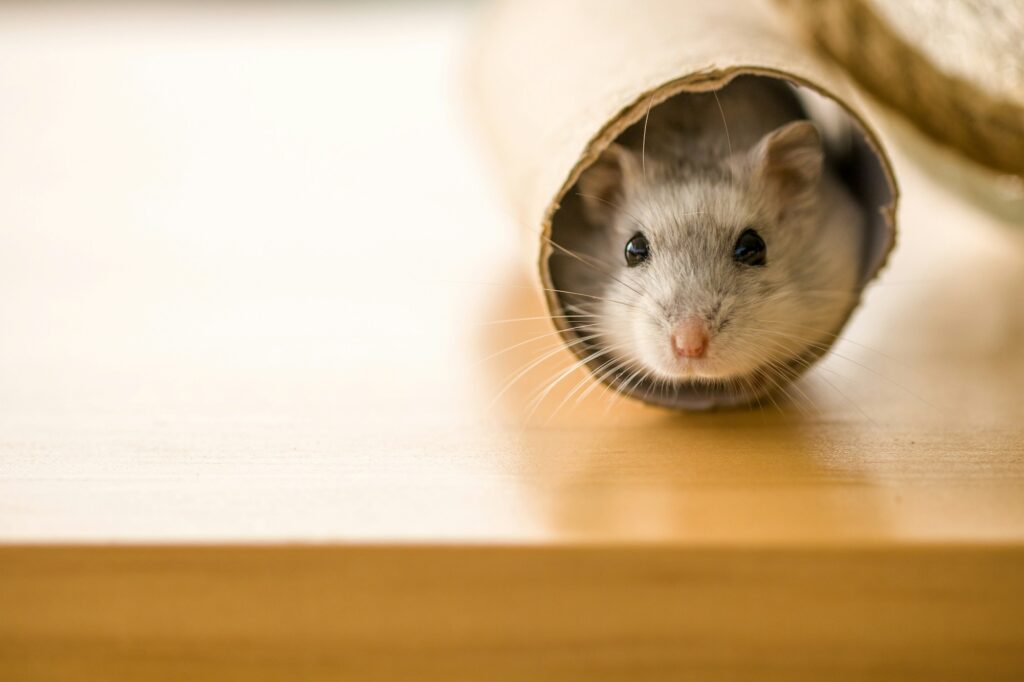
Pouches carry more than seeds. They carry non-food things too, like nesting material. Turns out that mouthful of shredded paper your hamster shuffles off with is building work, not a snack.
Mother hamsters sometimes carry their babies in their pouches. If a mom feels her nest is in danger, she may tuck the pups in her cheeks to move them, which can look like something much worse to a scared owner. One more reason to leave a new litter and its mom completely alone.
And here’s the strangest one. Of the 19 hamster species, some have been seen filling their pouches with air, which helps them float when they swim. Please don’t test that with your Syrian or your dwarf. Pet hamsters don’t need a swim, ever.
The Empty Bowl Isn’t an Empty Hamster
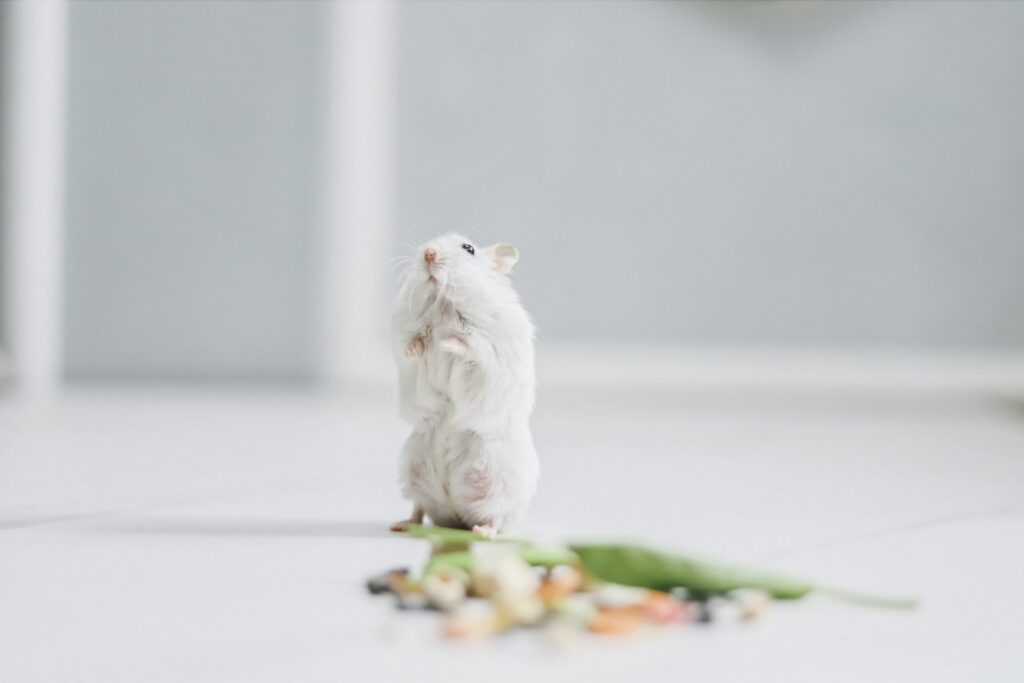
This is the mix-up I see most. You fill the bowl at night, and by morning it’s bare. So you fill it again, and again, and wonder how something that small eats that much.
Turns out it doesn’t. Most of that food went into the pouches and then into a pile somewhere in the bedding. The RSPCA describes it plainly: hamsters like to eat hidden away, so you’ll see them carry food in their cheek pouches to the nest or a hiding spot, where they eat it or stash it for later.
So before you add more, look for the stash. If it’s growing every day, your furry friend has plenty. Keep feeding the amount your vet or the food’s label suggests, and let the pantry do its job.
Better yet, skip the bowl now and then. The RSPCA suggests scattering or hiding food around the cage to make mealtimes interesting and to bring out natural foraging. A hamster that has to hunt for its dinner gets to use those pouches the way nature meant, and it gets bored a lot less.
Leave the Stash Alone (Mostly)
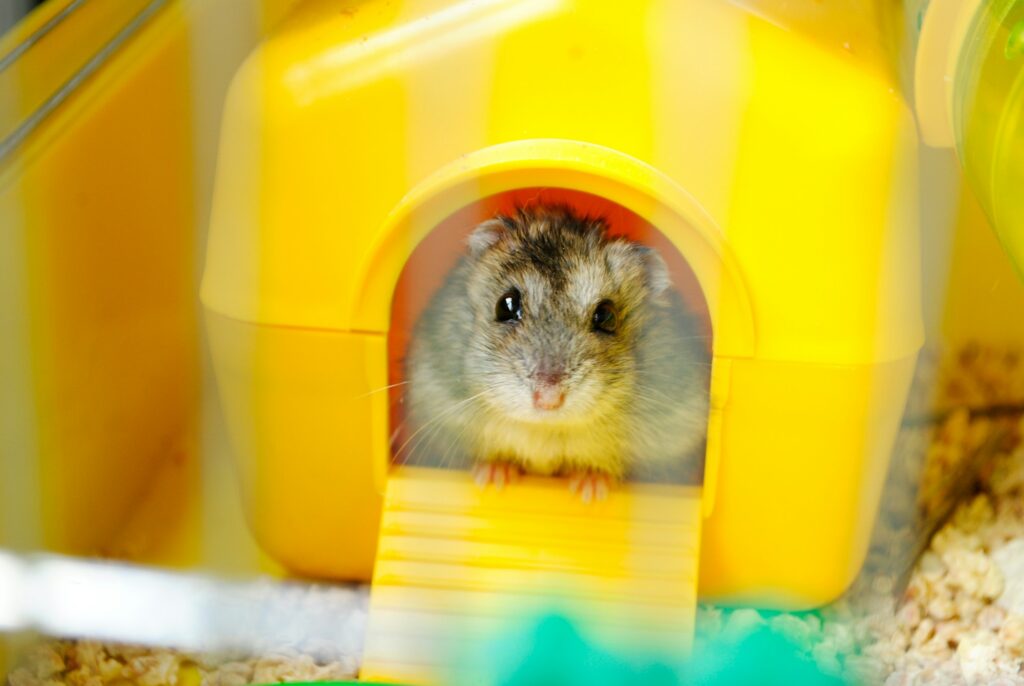
Cleaning the cage is where a lot of owners accidentally ruin their hamster’s week. You find a pile of seeds under the bedding, it looks messy, and out it goes.
The RSPCA’s cleaning advice is gentler than most people expect. Spot clean every few days, taking out soiled bedding, uneaten food and droppings. Do a deep clean 1 or 2 times a month, depending on the size of the cage. Clean while your hamster is awake, not in the middle of the day when it’s sleeping, and move a little old, unsoiled bedding and nesting material back in so the cage still smells like home.
Here’s how I’d handle the stash itself. Dry seeds and pellets can stay. Fresh food is different: a bit of apple or a green leaf that got pouched and buried will go off, so pull those out. The RSPCA is strict about wet food in particular. If a sick hamster is on it, remove all traces at least 2 times a day before it rots.
Their housing advice also asks for a nest box big enough for your hamster to set up a larder and still sleep comfortably. Give it room for the pantry, and the pantry stays in one place.
Tidying away every stash you find is the classic first-hamster mistake. Skip it.
What I’d Keep Out of Those Pouches
A pouch holds whatever goes in it. So I’d look at the cage from a hamster’s height, so to speak, and ask what it could stuff in there.
Fluffy bedding is first on my list. The RSPCA says not to use nesting material that separates into thin strands, like cotton wool or similar “fluffy” bedding, because it may cause harm if eaten and the strands can tangle a hamster up. Shredded paper, cardboard, wood wool or good hay are its picks instead.
Then certain foods. The RSPCA lists grapes and rhubarb as poisonous to rodents, so they shouldn’t be in the cage at all. Our food checker answers plenty of other “can my hamster eat this?” questions.
And big or sticky treats. Vets who write about pouch trouble note that some hamsters try to cram in pieces that are way too large. I’d cut treats small and skip anything gooey, since a pouch has to empty cleanly. A plain wooden chew toy is a better way to keep those teeth busy than a sticky snack.
When a Full Pouch Is a Problem
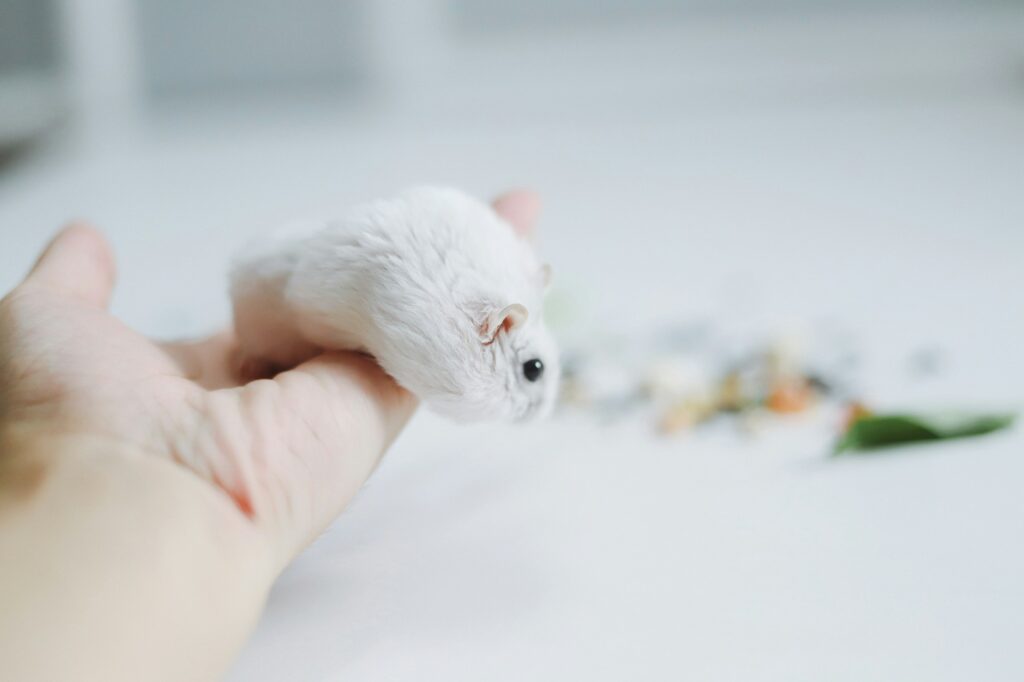
Two pouch problems show up in the vet guides. Both are jobs for a vet, not for you (and not for me either).
The first is impaction. Food gets stuck in a pouch and won’t come out, which can lead to infection and sometimes an abscess. A vet usually has to sedate the hamster to clear it out and clean the pouch. The thing to watch for is a cheek that stays puffed up long after your hamster has had a chance to unload it, or a hamster that’s suddenly eating less.
The second is a prolapsed, or everted, pouch. The pouch turns inside out and pokes out of the mouth, looking like a pink, fleshy lump. A very fresh case can sometimes be put back easily, but a damaged pouch may need surgery. The pouch tissue is delicate, so please don’t try to push it back or squeeze a stuck pouch empty at home.
One more link worth knowing: pouch problems can go along with dental problems. If the vet is looking at a cheek, ask them to check the teeth, too. And per the RSPCA, if your hamster starts eating less or its droppings turn moist, talk to your vet straight away.
Those are the rare cases, though. If you take one thing from all this, make it this: the stuffing is the point. A hamster that fills its cheeks, waddles off and comes back for more is a healthy hamster acting like a hamster.
Give it deep bedding to dig its own pantry, scatter some food so it has something to hunt, keep the fluffy stuff out of the cage, and only pull fresh food from the stash. If you’re setting up a cage now, our guide on how deep hamster bedding should be pairs well with this one, and so does our list of what hamsters need in their cage.
Watch the cheeks.
Puffy, then flat again a few minutes later, is normal. Puffy and staying that way, or a hamster that’s suddenly not eating, is a call to a vet who sees small pets. I’d rather make that call and be told it’s nothing than wait on it.