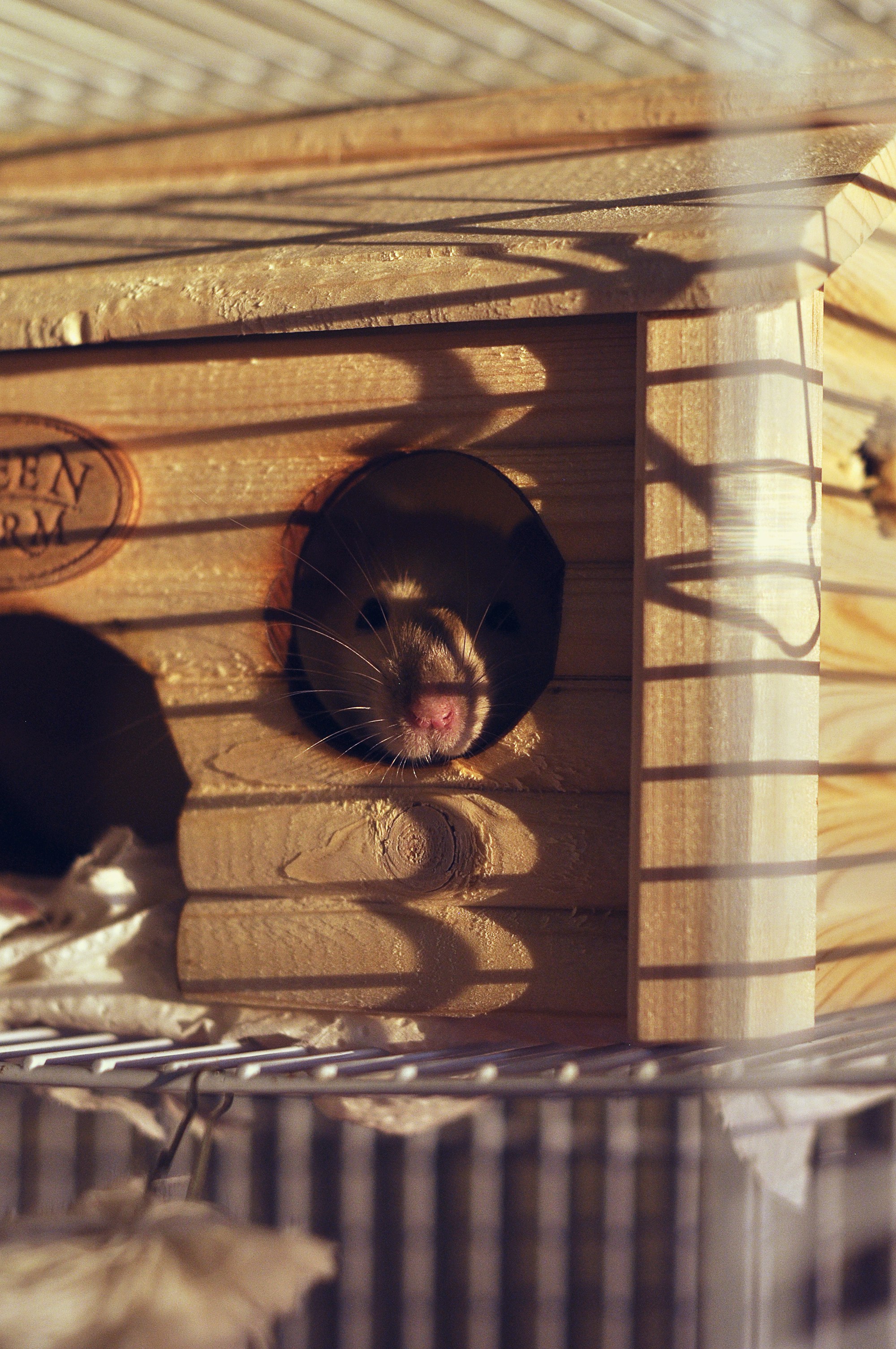

A hamster that bites its cage bars is usually telling you the cage isn’t giving it enough to do: not enough floor, not enough bedding to dig in, or not enough to chew. Researchers have a name for it, stereotypic wire-gnawing, and in the studies it shows up most in small cages with shallow bedding.
Matt here. If you’re reading this at 2 a.m. to the sound of clack, clack, clack, I feel you. The good news is that bar biting is one of the easier hamster problems to fix, and the fixes are mostly about the setup, not about the hamster.
Quick note first. I’m not a vet or a breeder. HamsterStar leans on what the welfare groups, like the PDSA and the RSPCA, and the published studies say. If your hamster’s teeth look wrong or it stops eating, a vet who sees small pets is the call, and I’ll say that again near the end.
1. The Cage Is Too Small
This is the big one. In a 2007 study from Switzerland, researchers filmed 60 female golden hamsters living alone in cages of four sizes: 1,800, 2,500, 5,000 and 10,000 square centimeters of floor. Every cage had the same bedding depth, the same toys, and a 30 cm wheel. So the only real difference was the floor.
Wire-gnawing showed up in all four sizes. But the hamsters in the small cages gnawed longer and more often. They also climbed onto the roof of their wooden house more, which the researchers read as a hint they wanted more space. Their conclusion was that hamsters in cages with at least 10,000 square centimeters of floor seemed better off than in smaller ones.
That 10,000 number is a cage of 100 × 50 cm, and it’s the same minimum the PDSA passes on from a German vet group for animal welfare. The PDSA is honest that there isn’t a lot of evidence for an exact size, and that this is a minimum, not a target. It also says most cages sold in shops aren’t big enough. So check the measurements on the box before you trust the pet store’s “hamster cage” label.
One more PDSA tip: one big level beats a tall cage with lots of floors, because hamsters don’t see well and can fall. If you’re shopping, our guide to the best hamster cages for Syrian hamsters goes through the bigger options.
2. There’s Not Enough Bedding to Dig In

Hamsters are diggers. The RSPCA points out that wild hamsters live in deep burrows and build nests down there, and a cage with an inch of bedding gives that instinct nowhere to go.
The same Swiss research group wrote in 2007 that deep litter has been shown to decrease stereotypic wire-gnawing in male golden hamsters. That’s two separate pieces of the same puzzle. More floor helps, and more bedding to burrow in helps too.
The PDSA’s number is no less than 25 cm, about 10 inches, of bedding, in a material that holds a tunnel. Paper-based bedding is the easy pick, and a few handfuls of soft hay help the burrows keep their shape. We went deep (sorry) on this in how deep hamster bedding should be, including the study that tested bedding 10 cm, 40 cm and 80 cm deep. If your cage can’t hold 25 cm of bedding, that’s a pretty good sign it’s the cage, not the hamster.
3. Nowhere to Hide or Build a Nest
A hamster is a prey animal, and it wants a dark, safe spot to sleep. The RSPCA says to always give your hamster a place to hide, plus a nest box big enough to sleep in, store food in and move around in. It should be dark inside. The RSPCA even likes a box with no floor, so you can check on your furball by lifting it off.
Nesting material matters too. The RSPCA lists good-quality hay, wood wool, shredded paper and cardboard. Skip anything fluffy and cotton-like, because the thin strands can wrap around legs. And the PDSA suggests putting the nesting material outside the box, so your hamster can carry it in and build the nest its own way. Honestly, watching them stuff their cheeks with paper and haul it home is half the fun of owning one.
One cleaning tip belongs here, too. A nest that gets torn out every weekend is one a hamster never really settles into, at least that’s my guess. The RSPCA’s routine is gentler: spot clean every few days, do a deep clean once or twice a month, and do it while your hamster is awake. Then put a little of the old, clean bedding back so the cage still smells like home.
4. Plain Old Boredom

The PDSA says that in the wild, hamsters burrow and climb, and walk for miles each day. In a cage, they need us to fake that a little. If the only thing in there is a food bowl, a bottle and a wheel, the bars start to look pretty interesting.
The fixes are cheap. Cardboard tubes and boxes to crawl through, hide in and shred. Paper bags with a little hay inside. The PDSA’s favorite idea is to make your hamster work for dinner: scatter the food pellets around the cage instead of using a bowl, or bury some in the bedding so it has to dig. Hamsters are foragers. My take? A cage where dinner takes a while to find keeps a hamster busy with something besides the bars.
Swap things around now and then, but not everything at once. The PDSA notes hamsters are creatures of habit, so move one or two things and leave the nest alone.
5. The Wheel Is Too Small (or Missing)

A wheel isn’t optional. It’s where a lot of that “walk for miles” energy goes. The PDSA’s sizes are at least 20 cm across for a dwarf hamster and at least 30 cm for a Syrian, with a solid running surface, not bars or slats that a leg can slip through.
Size matters more than people think. The PDSA says a lot of wheels are too small and force the hamster to run with its back curved, which can cause long-term pain. A hamster that hates its wheel may just stop using it, and all that energy has to go somewhere. Often it goes into the bars.
The wheel that comes with a starter cage is usually the first thing I’d replace. If you’re curious what happens without one at all, we covered what happens if you don’t give your hamster a wheel.
6. Those Teeth Need Something Better to Chew

Gnawing is normal hamster behavior. The PDSA calls it a natural behavior that stops their teeth from getting overgrown and keeps them from getting bored. So the goal isn’t to stop your hamster from chewing. It’s to give it something better than metal.
The PDSA’s list is gnawing blocks, untreated softwood branches and shelves, and cardboard. If you use branches, it says to wash them and bake them on a low heat for an hour first. It also suggests Timothy hay, which helps keep the teeth healthy. Put a chew toy right where your hamster bites the bars. Sometimes it just grabs whatever’s closest. Our hamster chew toys guide sorts the safe ones from the ones to skip.
Here’s the part I want you to watch, though. Chewing metal all night can’t be doing those teeth or that little nose any favors. If you see broken or crooked teeth, teeth that look too long, a sore or bald patch on the nose, or your hamster drops food and stops eating, take it to a vet who sees small pets. That’s not a setup fix. That’s a vet visit, and the sooner the better.
7. It’s Awake, It’s Night, and It Wants Out
Hamsters sleep in the day and get busy in the evening and at night. That’s exactly when bar biting starts, and exactly when you’re trying to sleep. The PDSA also calls them fantastic escape artists, and a hamster pulling at the door is often just testing the exits.
Where the cage sits matters too. The RSPCA says hamsters hear high-pitched sounds we can’t, from things like TVs, computer screens and vacuum cleaners, and can find them stressful. The PDSA adds the washing machine to that list, and wants the room at a steady 18 to 21°C, out of drafts and direct sun. A cage beside a TV in a hot room is a cage with a stressed hamster in it.
One more thing, and this is my read, not a study. If every time your little buddy bites the bars you open the cage or hand over a treat, it may learn that biting gets results. Do your fixes first. Then try not to reward the clacking itself.
If I set up a cage for a bar-biting Syrian tomorrow, here’s my order. Floor first: at least 100 × 50 cm, one level. Then bedding: 25 cm, paper with some hay. Then a 30 cm solid wheel, a dark hide, and food scattered so dinner turns into a hunt. Give it a week or two to settle before you decide whether it worked. And if the teeth or the nose look wrong at any point, skip the waiting and call that vet.