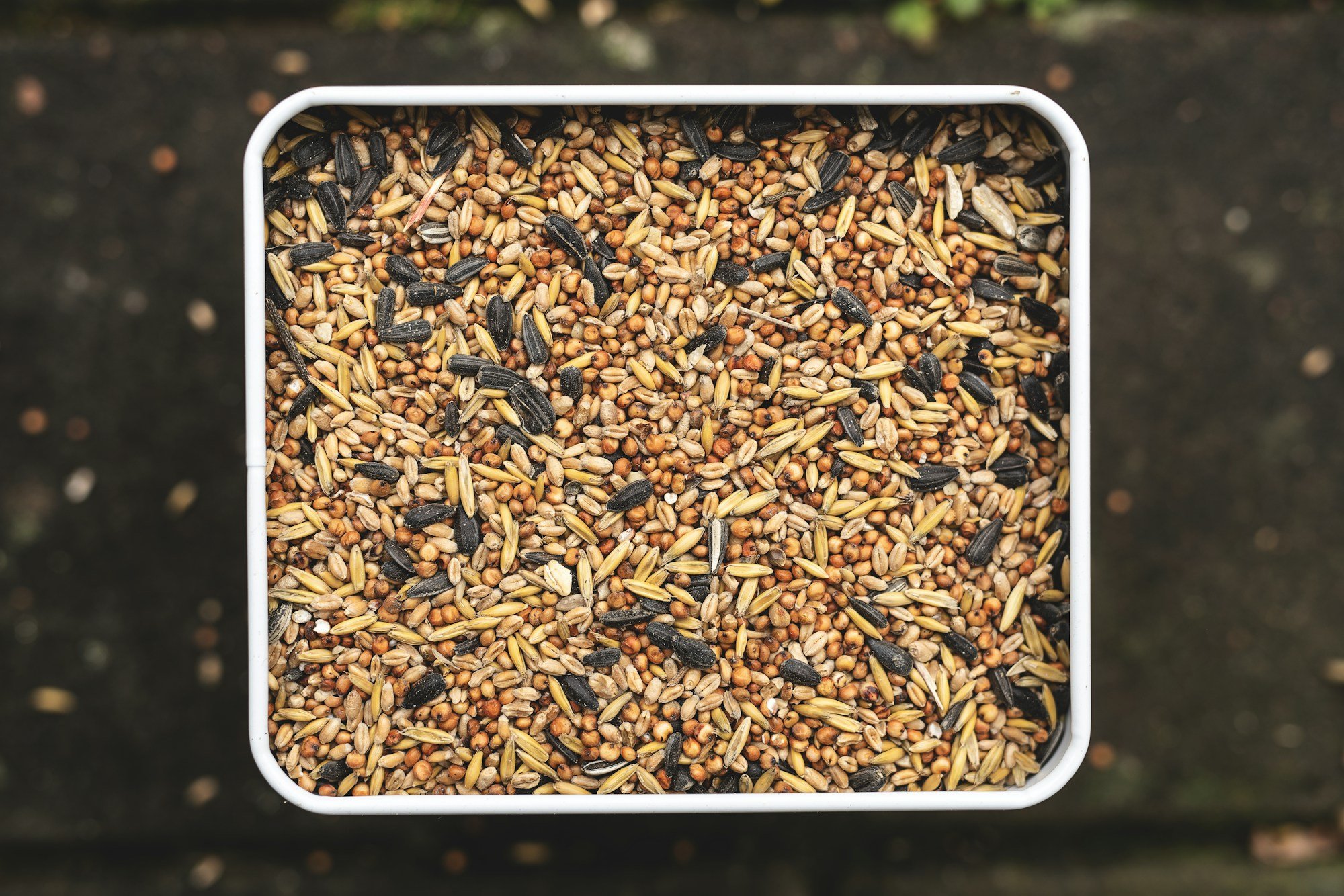

Scatter feeding means you skip the bowl, or most of it, and spread your hamster’s daily dry food around the cage, with some of it buried in the bedding. Your hamster has to sniff out its dinner and dig for it, the way a wild hamster would. The RSPCA and PDSA both suggest it. Scatter only the dry food (pellets or seed mix), keep fresh veggies in a small dish, and check the hidden stash every few days.
If your furry friend stops eating, that’s a call to a vet who sees small pets, not a reason to try a new feeding game.
For a healthy hamster that’s bored silly, though? Honestly, this is the cheapest upgrade you’ll ever give the cage. It costs $0. It turns 2 minutes of eating into a whole evening of work, and I’d argue it’s more fun to watch than anything on TV.
Why a Food Bowl Only Does Half the Job
Think about where a hamster’s dinner comes from in the wild. The RSPCA says wild hamsters eat a mix of seeds and cereals, plus insect larvae and bigger bugs like crickets. None of that shows up in a pile. It gets found, one seed at a time.
They cover a lot of ground doing it. The RSPCA says wild hamsters are mostly up at dusk and at night and can run up to 5 miles a day. Five miles! Turns out that bowl in the corner is skipping most of a hamster’s night. PDSA adds that in the wild they walk for miles every day and spend a big chunk of that time searching for food.
Now picture the setup most of us bring home from the pet store. One bowl, filled to the top, in the same corner every single night. Your little buddy eats in a couple of minutes, and then there’s a very long night ahead with nothing to hunt for.
PDSA puts it plainly: making a hamster work for its meals keeps it busy and helps prevent boredom. A bored hamster finds its own hobbies (you won’t like them). If yours is already chewing the bars at 2 a.m., our guide on why a hamster bites its cage bars covers the other causes too, starting with cage size.
How to Start Scatter Feeding Tonight
Use the same food. Use the same amount, too, whatever your food’s label says for your hamster’s size. Scattering isn’t a reason to feed more; it’s the same dinner in more places.
For the first 2 or 3 days, I’d put half in the bowl and toss the other half on top of the bedding where it’s easy to spot. Once your hamster is finding every bit of it, move more out of the bowl. A lot of owners end up ditching the bowl for dry food altogether, and that’s where I’d aim.
Then make it harder. PDSA suggests burying food deep in the bedding so your hamster digs for it. That only works if there’s something to dig in, and PDSA wants at least 25 cm of bedding (about 10 inches) in a cage with at least 100 x 50 cm of floor. Our post on how deep hamster bedding should be explains why that depth matters so much.
Two places to skip: the wheel and the sand bath. Oh, and the corner your hamster uses as a toilet, obviously. Nobody wants dinner there.
Do the scatter in the evening, right when your hamster wakes up. You get a front-row seat for the hunt, and kinda the best part is watching a Syrian stop dead, twitch its whiskers and then dive nose-first into the bedding like it just heard a rumor about a sunflower seed.
Pellets or Seed Mix: What Goes on the Floor

Dry food is what you scatter, and the kind you pick matters more than you’d think. PDSA says hamster pellets hold all the nutrients your hamster needs, and every pellet is the same, so your hamster can’t pick out its favorite bits and leave the rest.
Muesli-style mixes are another story. PDSA says hamsters tend to eat the sugary pieces and skip the high-fiber ones, which can lead to dental problems and obesity. A small amount of mix sprinkled over the pellets is fine for interest. Just not as the whole diet.
The Merck Veterinary Manual adds two numbers worth taping to the food bin. A commercial rat or mouse pellet with 15–20% protein meets a hamster’s needs, it says, and treats should be no more than 10% of the diet. Merck also says to go easy on seeds, since a hamster may fill up on those instead of its balanced pellets.
Here’s a bonus nobody tells you about. When the food is spread out, you can see what got left behind. A floor full of untouched pellets the next evening, with every last sunflower seed gone? That tells you exactly what your furball is really eating.
Fresh Food Stays in a Dish
Don’t scatter the cucumber.
Fresh food buried in bedding goes bad down there, and you won’t find it until you smell it. The RSPCA says small amounts of greens and cleaned root veggies do belong in a hamster’s diet, plus the odd bit of fruit like apple. PDSA puts the daily portion of fresh stuff (herbs count) at about 1 to 2 tsp. Put that in a small, shallow dish, and take out whatever’s left before it spoils.
PDSA’s safe list includes apple (seeds removed) and banana, melon or pear, plus veggies like broccoli and cabbage. Cress and cauliflower make the list too. The RSPCA says no grapes and no rhubarb, since both can be poisonous to rodents. PDSA says to skip citrus for now because the research on it isn’t settled. One more: go easy on sugary fruit with a Russian dwarf, since PDSA says that breed is especially prone to diabetes.
Wet or mushy food is its own thing. The RSPCA says to give it only if your vet tells you to, and then to remove every trace at least twice a day, because it grows mould and bacteria. That’s a dish job. Never a scatter job. For the long list of what’s safe, check what’s on a hamster’s menu.
Cardboard Foraging Games That Cost Nothing
Once the scatter gets easy, give the food somewhere to hide. PDSA suggests tucking hay, pellets or fresh greens into paper bags and cardboard tubes or boxes. Your hamster gets the hunt first and then gets to shred the wrapping, which, trust me, is half the fun for them.
Start with an empty toilet roll tube. Drop in 4 or 5 pellets, fold both ends shut and set it in the bedding. A plain paper lunch bag with a handful of hay and a pinch of food, twisted closed, works the same way. Got a small box? Cut a hole about the size of a quarter in one side (bigger for a Syrian) and you’ve built a treasure room. Pull off any tape or staples first.
Keep hay around for this. PDSA says Timothy hay is full of fiber and helps keep teeth healthy, so stuffed into a tube it’s the hiding spot and the snack at once.
Swap the games every few nights so the cage never turns into a solved puzzle. When the cardboard is shredded to confetti by morning, that’s a job well done, not a mess to fix. Our post on hamster chew toys lists what else is safe to gnaw, and what to keep away from those teeth.
The Hidden Stash Is Normal, Not Greedy
Don’t be surprised when the scattered food vanishes in 10 minutes flat. The RSPCA says hamsters like to eat hidden away. They carry food in their cheek pouches back to the nest or a hiding spot, then eat it there or stash it for later. A full pantry under the hide is just a hamster doing hamster things. Our post on why hamsters stuff their cheeks has more on those stretchy pouches.
The RSPCA even suggests a nest box big enough for your hamster to set up a larder and still sleep in comfort. So plan for the stash. Don’t fight it.
You do still have to check it, though. The RSPCA says to spot clean every few days, taking out soiled bedding and droppings. Uneaten food goes, too. The easy middle ground: leave a dry stash of pellets alone and pull out anything fresh or damp. That way you’re not wrecking all that hard work every single time you open the cage.
And keep an eye on how much is going in. The RSPCA says if your hamster starts eating less, or its droppings turn moist, talk to your vet right away. A soiled back end is the same kind of warning. Here’s the catch with scatter feeding: it makes eating harder to watch than a bowl does. So look at the stash and the leftovers on purpose, every time you spot clean. Something seems off? Call a vet who sees small pets that night, not next week.
Tonight, scatter half the dry food and pull up a chair. I’d bet you never fill that bowl to the top again.